


 PushOwlCase study 02
The work between an idea and Send
AI Product Design · PushOwl AI
A useful draft gets a campaign moving.
A merchant wants to promote last month's popular products. Before they can write the email, they need to find those products. Then assemble the message. Then choose who receives it. At PushOwl, that could mean SQL, an empty template, and a segment builder full of rules. I designed AI workflows that gave each task a concrete starting point: a query to preview, an email to edit, an audience to assess.
AI-assisted campaign workflows at PushOwl: 35% higher campaign creation and about 18 minutes saved per campaign.
A familiar question became a technical task
More than 200 monthly support tickets concerned what to write and whom to target. Interviews exposed the translation problem underneath: merchants could describe what they wanted, but expressing it in the product required another vocabulary. Popular products became a SQL query. Repeat buyers became segment rules.
The intention was already there. The interface made it harder to act on.
I organized the work around three jobs: find the data, make the email, and choose the audience. Internally, we called them Query, Create, and Target. The design question stayed the same across all three: what can we put in front of a merchant that helps them take the next step?
“I need popular products in the last 30 days, but I don't know SQL. Stuck.”
“I want repeat buyers, but the segment builder is overwhelming.”
Let the question come before the query
Popular products in the last 30 days is a reasonable request. Answering it in SQL requires knowing which tables and fields hold the information. A campaign could stop here, before the email editor even opened.
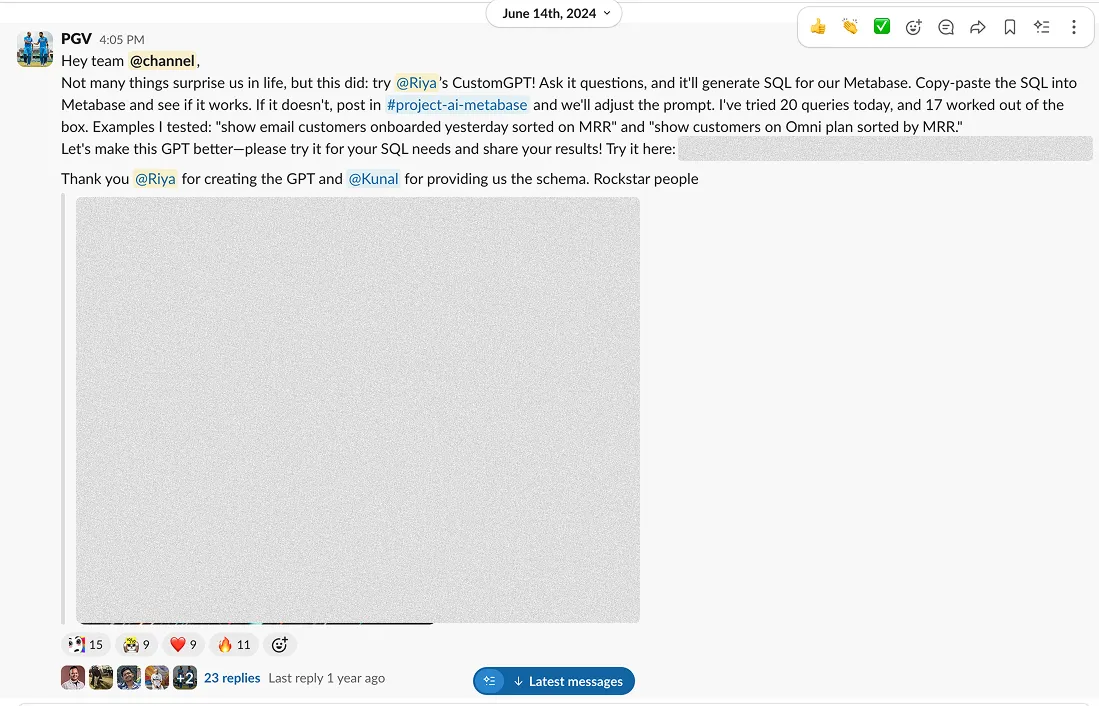
Custom SQL GPT used the database's table and field definitions, along with roughly 100 example queries, to translate the request. We added protections against destructive operations and made the generated query visible in a preview before execution.
The preview gave the output a place to be inspected before it ran. That is a separate design job from generating it. Support tickets on SQL workflows fell 45%, and ad-hoc data iterations moved from days to minutes.
A paragraph is still a long way from an email
Copy still needs somewhere to go. A merchant has to arrange the layout, add buttons and image descriptions, and make the email work on a phone. Generating a paragraph leaves that assembly job waiting.
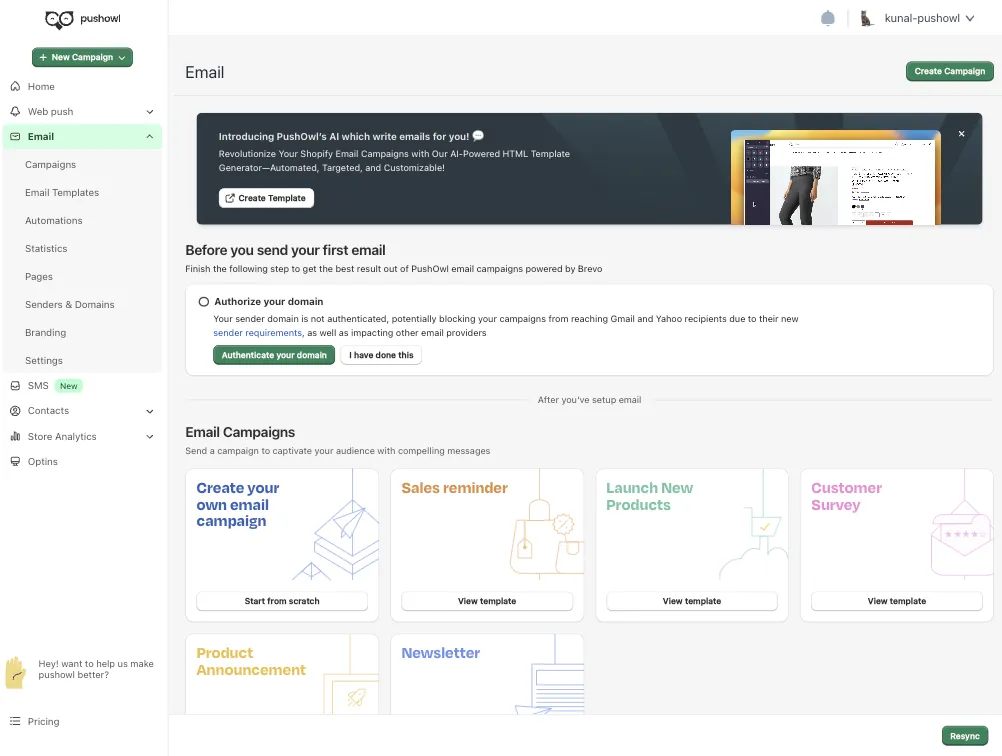
HTML Email GPT produced a complete HTML email with responsive blocks, calls to action, and image alt text. The merchant could begin by reviewing the message as an email.
The request needed an equally familiar starting point: a launch, a sale, or a restock. Prompts organized around those outcomes had 60% fewer errors than prompts organized around features. Time to the first email fell, and template adoption increased among new users. Choosing the occasion helped merchants tell the system what they needed.
An audience suggestion needs a reason
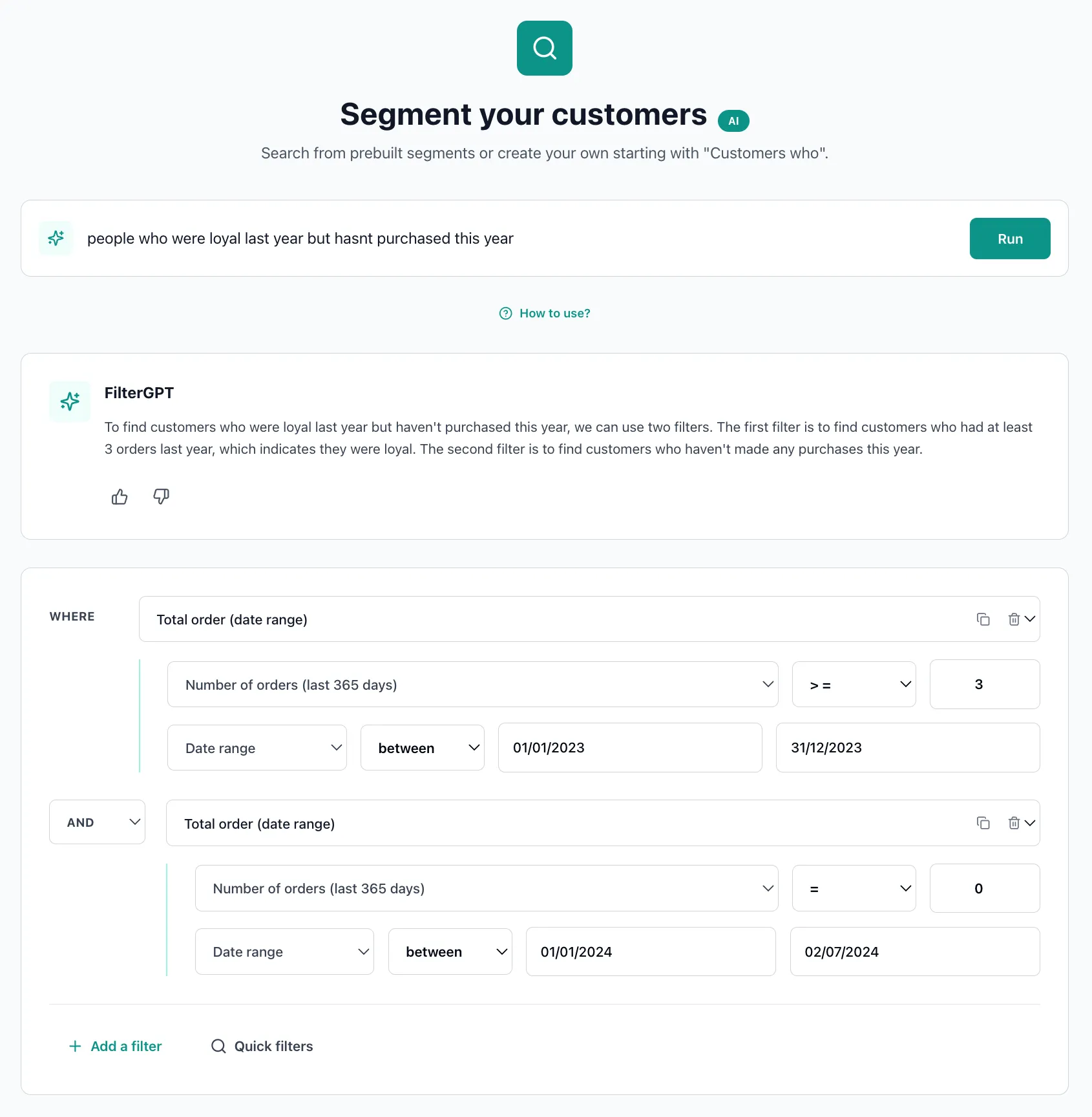
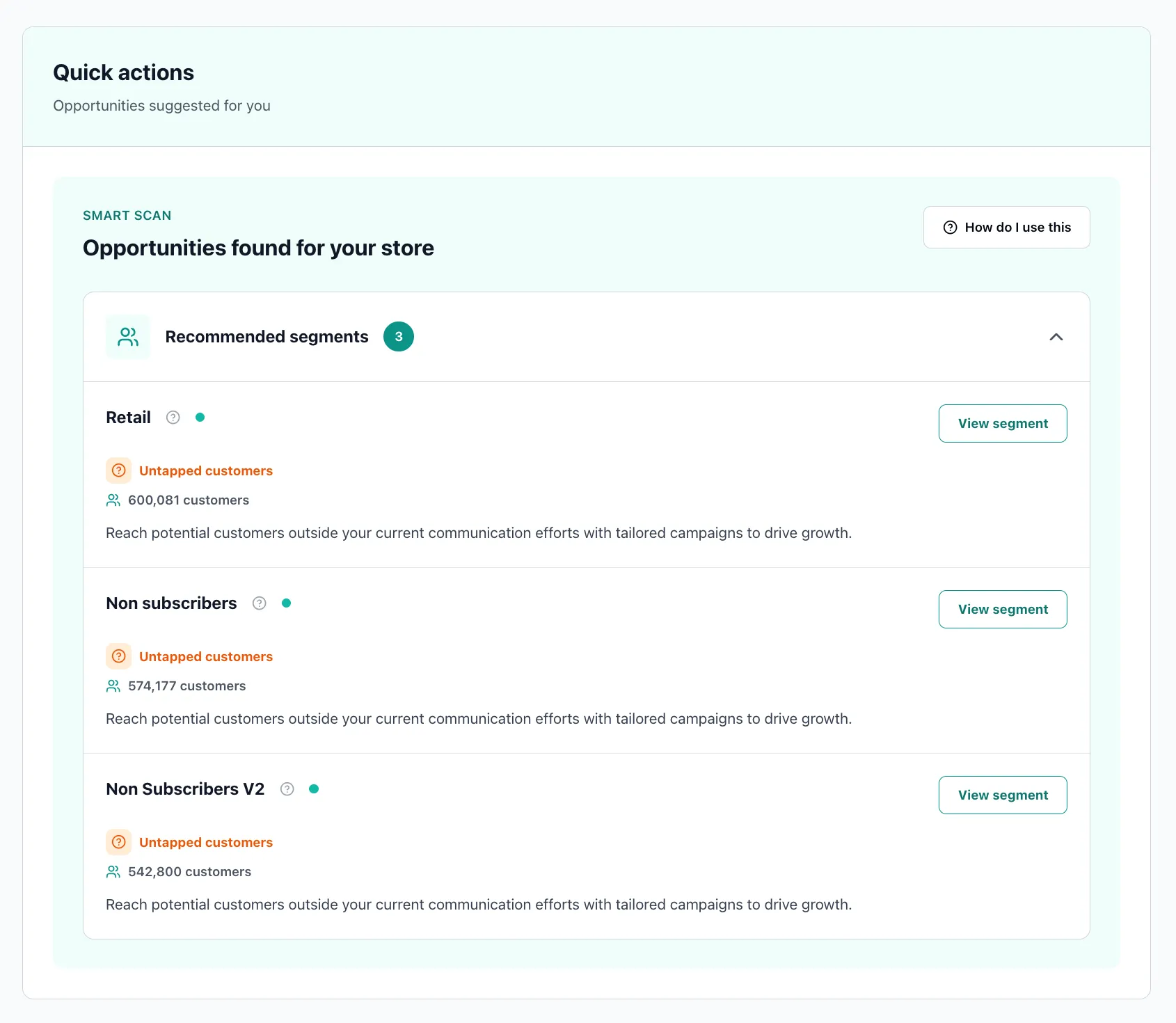
An audience recommendation asks a merchant to trust a choice they did not make themselves. AI Smart Segments offered three daily suggestions and showed the numbers behind each one.
The revenue estimate used average order value, audience size, and purchase probability. An exportable recipe included the segment size, formula, and estimated revenue. Those details gave the merchant something to examine before choosing whom to contact.
The estimate was still an estimate. Suggestions were more relevant for stores with richer customer data. Showing the formula made the reasoning visible; it could not make thin data more reliable.
A generated result can create another job
The wider work included product recommendations that combined purchase patterns with product attributes, inserting dynamic blocks when an email rendered. Modular opt-in layouts across channels showed 22-31% list growth in beta. These extended the work to choosing products and growing the list.
AI image resizing reached a different conclusion. We paused it because the quality and cost trade-off did not justify proceeding, and documented preset aspect ratios as a fallback.
That pause clarified the standard for the work: count the effort left after generation. A result that needs fixing has handed the merchant another task.
More campaigns made it past the starting point
Product usage and workflow timing showed merchants reaching useful output sooner and creating more campaigns. The two signals belong together: a faster start matters when it helps the campaign move forward. These are observed results across the shipped features; they do not isolate the contribution of each design decision.
- 35% higher campaign creation rate across shipped features.
- About 18 minutes saved per campaign.
- Time to the first valuable output fell from roughly 15 minutes to 90 seconds.
Measure the work left to do
The query preview, complete email, and audience recipe each made an AI result easier to work with. That is the pattern I would carry forward: give the merchant something they can inspect, change, and use.
Next, I would follow one generated email through review to send, tracking how much repair it needs along the way. Faster generation would only count as progress if merchants also spent less time fixing the result. More rework would be a reason to improve the output before expanding the feature.
The useful measure is how much closer the merchant is to Send.